Interior designer for high‑end restaurants
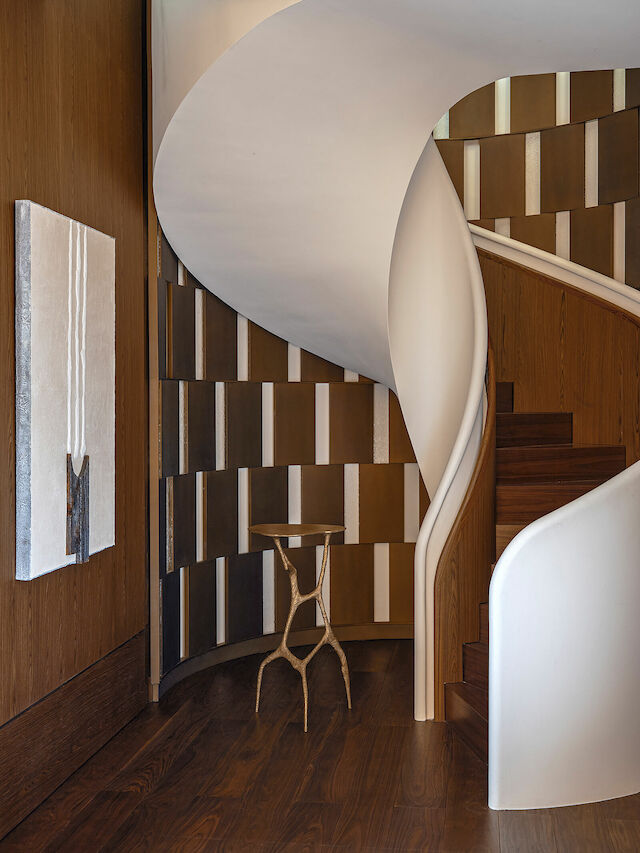
Interior designer for restaurants: creating a high-end experience with Rodolphe Parente
In the restaurant industry, interior architecture is not just about “making a place look nice”. It directly influences footfall, average spend, perceived standing, memorability, customer reviews and the ability of a venue to become a true destination. For a gastronomic restaurant, a premium brasserie or a festive bar-restaurant, working with a specialized interior designer helps turn a concept into an experience, and an experience into a reputation.
Rodolphe Parente designs interior architecture and design projects, particularly within the hospitality sector: hotels and restaurants. His approach is especially relevant for establishments seeking a strong visual signature, a sense of detail and an atmosphere aligned with a high-end positioning.
Why interior architecture is decisive for a restaurant
A guest quickly decides whether they want to stay, come back, recommend the place or post a photo. The atmosphere matters as much as the food: lighting, materials, acoustics, comfort, spatial rhythm, circulation and intimacy. Good interior design improves the experience, even when the guest cannot always explain why.
The concrete benefits of an interior design project for a restaurant include:
- strengthening the positioning: bistronomy, gastronomic, festive, confidential, luxury
- improving the readability of spaces: reception, waiting area, dining room, bar, intimate zones
- increasing comfort: acoustics, seating, lighting, distance between tables
- improving flows: service, kitchen, pass, dishwashing area, storage
- creating memorable moments: entrance, bar, staircase, banquettes, lighting
- securing durability: materials suited to intensive use, maintenance and ageing
In the high-end segment, success lies in proportion: a strong personality, but elegance that lasts. Controlled theatricality, but impeccable comfort.
What guests look for in a high-end restaurant
The codes vary depending on the concept, but some criteria are always present:
- a sense of quality from the entrance: welcome, light, materials, scent, calm
- a feeling of comfort: seating, temperature, acoustics
- a coherent atmosphere: everything tells the same story
- a space that makes people want to stay longer: bar, banquettes, rhythm of the room
- a photogenic identity without gimmicks: details, focal points, depth
A restaurant interior designer works on these elements at the source: proportions, materials, lighting, furniture, textures, circulation and finishing details.
Rodolphe Parente’s method for designing a restaurant
Rodolphe Parente develops a global vision of space, applied to varied destinations including restaurants. For a restaurant, this comprehensive vision translates into a rigorous process, from concept to final experience.
Typical stages of a restaurant interior design mission include:
- defining the positioning: clientele, average spend, service style, rhythm, identity
- concept and artistic direction: story, atmosphere, material palette
- zoning and guest journey: reception, bar, dining room, private areas, circulation
- FF&E selection: furniture, lighting, textiles, finishes, art
- creation of signature pieces: bar, staircase, banquettes, bespoke elements
- aesthetic monitoring and consistency of execution down to the details
The level of quality is not defined only by “noble materials”. It is defined by overall harmony, precision in transitions, perceived quality and comfort in use.
Yeeels, Paris: a signature address on Avenue George V
Among the most frequently cited restaurant and bar projects, Yeeels in Paris is an emblematic reference: a restaurant and bar, associated with a club atmosphere, located on Avenue George V, designed with Benjamin Liatoud, organized over two levels and described as a place with contrasting atmospheres.
This project is often mentioned for:
- the use of materials with strong perceived value, such as marble, brass, mirrors and fabrics
- a contrast of atmospheres between levels
- a strong sense of staging, designed as an experience in itself
It is a relevant example of what high-end restaurant interior architecture can produce: an immediately recognizable identity, a constructed atmosphere and a spatial journey that contributes to the narrative of the place.
La Brasserie du Provençal, Hyères: restaurant design conceived as an experience
Beyond standalone restaurants, high-end hospitality often includes restaurants integrated into hotels. Hôtel Le Provençal, on the Giens Peninsula in Hyères, illustrates this logic: the property includes several dining offers, and sources indicate that the establishment was redesigned with the involvement of Rodolphe Parente.
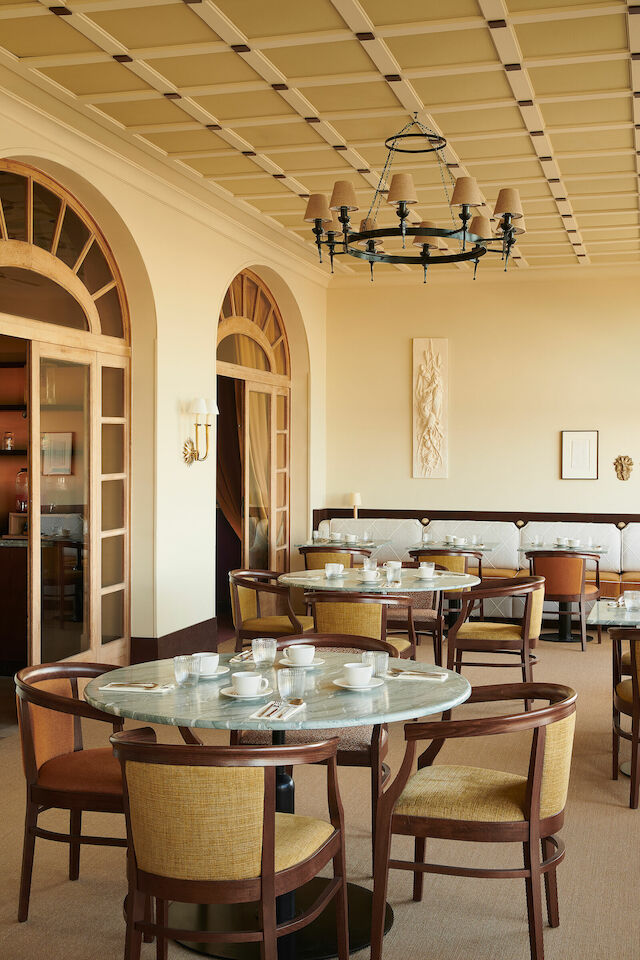
At the scale of a specific space, the page dedicated to La Brasserie mentions that it was redesigned by Rodolphe Parente, with notable work on the counter, banquettes, colours and materials.
For a restaurant client, this type of reference matters: it shows the ability to design a dining space consistent with a high-end positioning, within a context of intensive use and high expectations around experience.
Designing a dining room that makes guests want to return and recommend
The heart of a restaurant is the dining room: density, comfort, intimacy, noise and light. A good restaurant interior designer makes decisions on very concrete subjects:
- distance between tables and sense of space
- real seating comfort, especially over a period of 1.5 to 3 hours
- acoustics: reverberation, materials, ceilings, fabrics, banquettes
- lighting scenarios: lunch, dinner, late evening
- perceived quality: joinery, handles, details, alignments, finishes
In the high-end segment, the objective is to create an enveloping atmosphere without making the space feel oppressive, and a lively place without acoustic fatigue.
The bar as the centrepiece of a premium restaurant
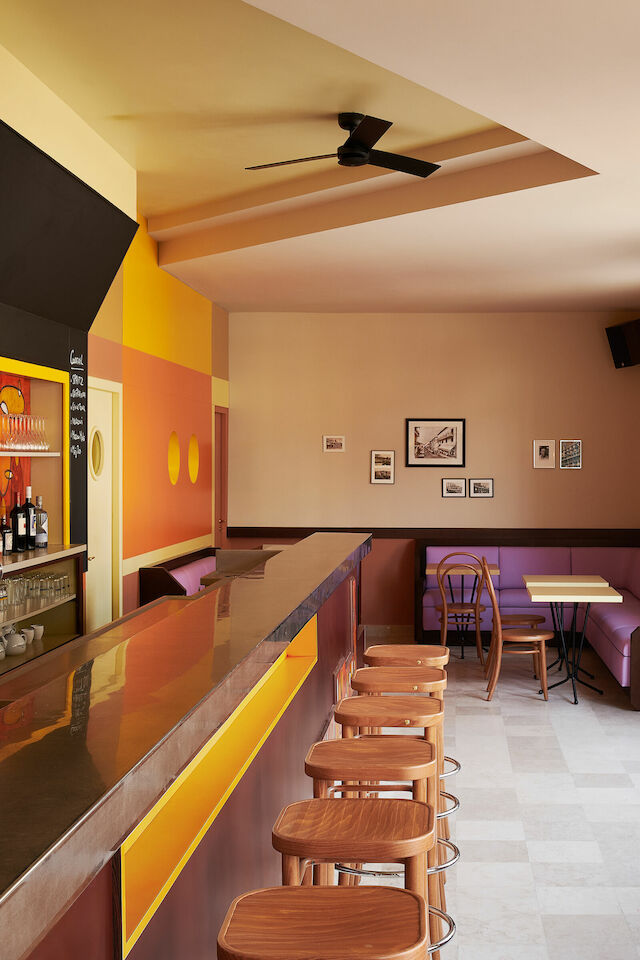
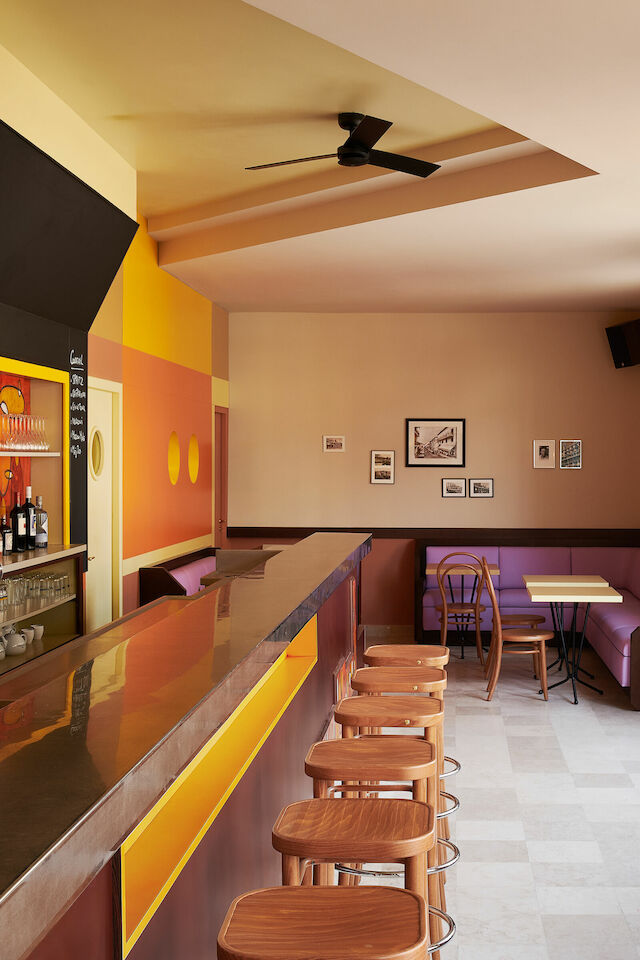
In many concepts, the bar is no longer secondary: it is a stage. It can support part of the revenue, create a first point of contact and embody the venue’s signature.
A luxury-oriented restaurant interior design project often works on:
- the visibility of the bar from the entrance, without blocking flows
- the height, lighting and materials of the counter
- the comfort of the stools and the posture they create
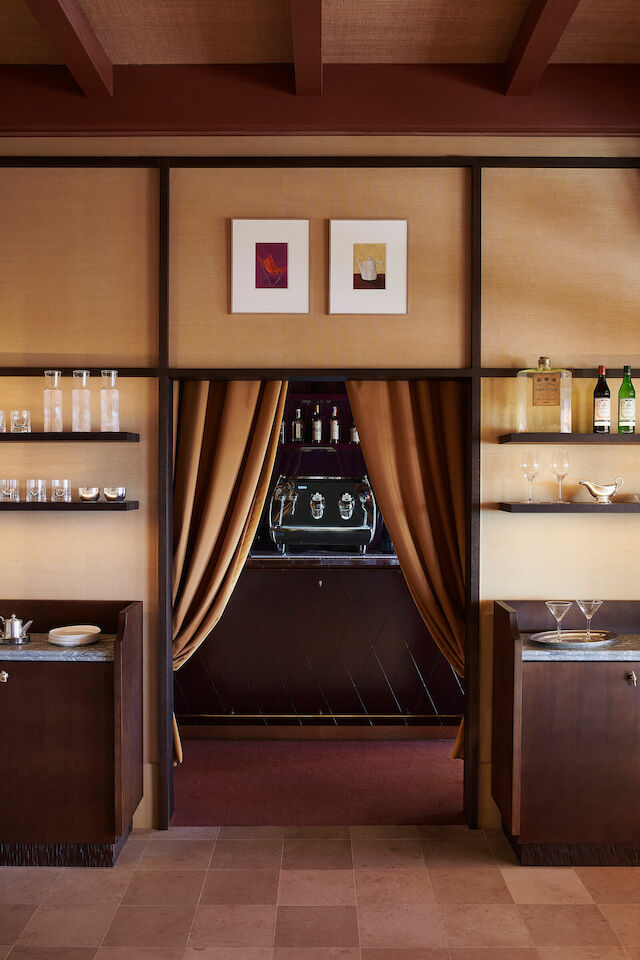
- the back bar as a decorative feature: mirrors, shelves, composition, lighting
- consistency with the dining room: the same codes, but with a different intensity
Projects such as Yeeels, described as combining contrasting atmospheres with strong staging, clearly illustrate this bar/restaurant logic, where interior architecture contributes to the energy of the venue.
Circulation and flows: the invisible elements behind service quality
In a restaurant, poorly planned circulation is felt immediately: waiting at the entrance, uncomfortable tables, service routes crossing the guest journey, noise and stress. A restaurant interior designer works on:
- staff routes: kitchen, pass, dining room, dishwashing area, storage
- waiting areas: reception, cloakroom, invisible queue
- guest fluidity: entrance, toilets, private areas
- layout efficiency without compromising comfort
Here, luxury is expressed through a sense of naturalness: service feels fluid, the dining room breathes, transitions are clear.
Materials and finishes: perceived luxury, real durability
The choice of materials in a high-end restaurant must reconcile:
- perceived luxury: materiality, touch, depth, patina
- resistance to intensive use: knocks, stains, repeated cleaning
- controlled ageing: what develops a good patina versus what deteriorates
- maintenance: teams, products, frequency
This is a key point: a venue can look spectacular when it opens and very quickly lose perceived quality if the materials are not suited to the use.
A “luxury” restaurant is not defined by one single style
Luxury in restaurant design can be:
- soft and confidential
- sunny and Mediterranean
- theatrical and nocturnal
- minimal and radical
- classic, but reinterpreted
Interior architecture is there to align the style with the cuisine, the service, the clientele, the neighbourhood and the economic objective. Projects described as playing with contrasting atmospheres and premium materials show this ability to create a spatial narrative consistent with a dining experience.
An interior designer and decorator to create a must-visit restaurant destination
A high-end restaurant must be designed as a complete experience: cuisine, service, atmosphere, comfort and rhythm. Interior architecture turns this intention into reality: a coherent, long-lasting and memorable place.
References such as the restaurant and bar Yeeels in Paris, on Avenue George V, designed with Benjamin Liatoud with an approach based on contrasting atmospheres, and the work on dining spaces such as La Brasserie du Provençal in Hyères, show expertise suited to premium restaurant projects and high-end hospitality.